Homeowners' pick for heating and cooling across northeast Ohio and the Western Reserve
What a Real Tune-Up Includes (and What It Won't Fix)
You booked a tune-up, someone showed up for twenty minutes, and you still are not sure what they did. Fair question. A real maintenance visit is mostly measuring and cleaning, and it should end with you knowing the condition of your system. Here is what we check on a furnace or an AC, what a tune-up actually prevents, and what it will never fix.
Call (888) 414-3292- A real person answers
- Open 7 days
- Written quote before work starts
Taking calls until 5:00 PM ET
Written by the Trusted Comfort service team and checked by our field technicians
What Neglect Actually Does to a System
Nothing breaks the first year you skip maintenance. It stacks up. A filter left in too long starves airflow, so the furnace runs hotter than it was designed to and the heat exchanger takes the stress. On the cooling side, a dirty outdoor coil means the system cannot dump heat, so pressures climb and the compressor works harder every cycle. Blower wheels load up with dust and move less air. Drain lines silt shut and water backs into the pan. Across our long heating seasons in Ohio, Pennsylvania, Michigan and the rest of the region, a system runs thousands of hours. Small resistance adds up to short parts life.
What We Actually Do on a Tune-Up
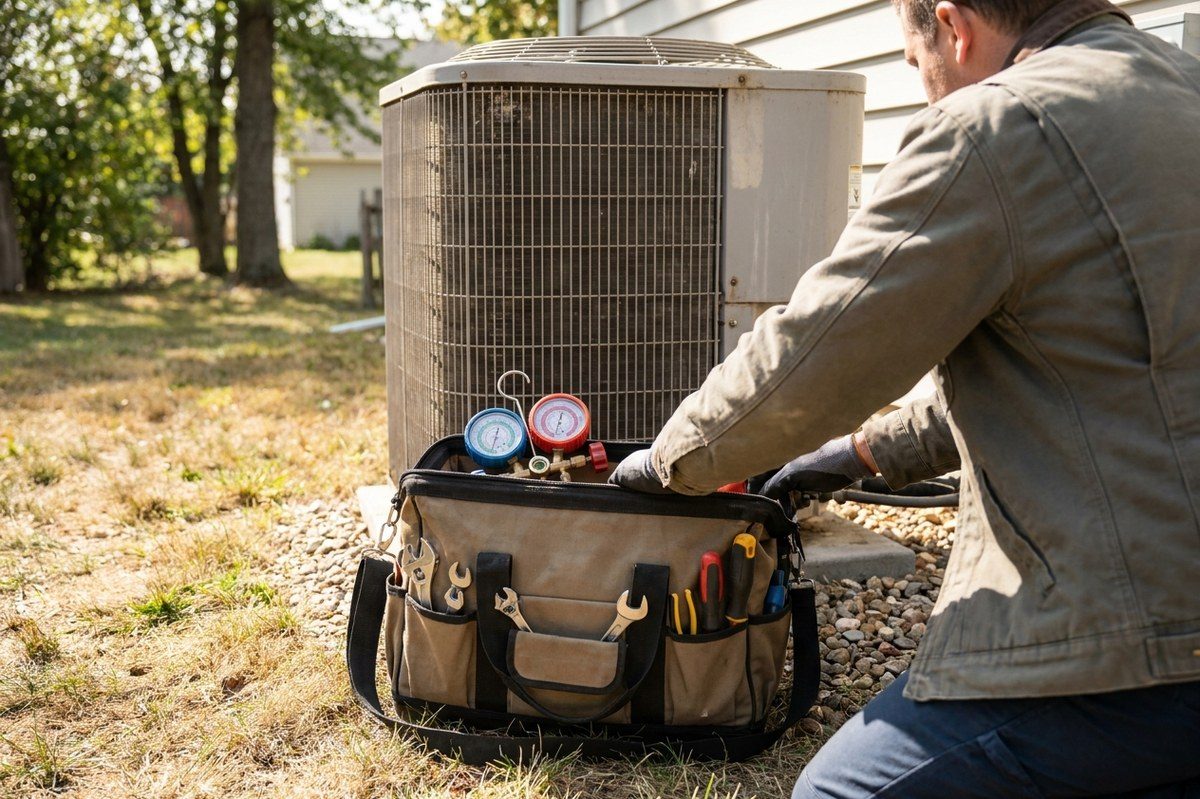
On heating, we check the burners and flame pattern, inspect the heat exchanger, test safety controls and limits, measure temperature rise across the furnace, look at venting and combustion air, and read the amp draw on the blower. On cooling, we clean the outdoor coil, check refrigerant performance against measured pressures and temperatures, test the capacitor and contactor, clear the condensate drain, and check the indoor coil and blower. Both visits include thermostat operation, electrical connections, and a filter change. You should get numbers, not a thumbs up. Numbers tell you whether a part is fine or fading.
How Often, and the One Habit That Matters Most
Twice a year is the target: heating checked in fall, cooling checked in spring. If you only do one, do heating, because that is the system that runs the longest here and the one with combustion safety attached to it. Between visits, the habit that prevents most of what we see is changing the filter on a schedule you actually keep. Write the date on the edge in marker. One inch filters usually want every one to three months, thicker media filters longer. Also walk around the outdoor unit in spring and pull the leaves, grass clippings and cottonwood fuzz off it.
Warning Signs You Are Already Past Maintenance
Call for heating repair or air conditioning repair, not a tune-up, if the system short cycles, if you hear grinding or a metallic scrape from the blower, if rooms that used to be comfortable are not, or if the unit trips the breaker. Rusty water around the furnace base, a yellow lazy burner flame, ice on the refrigerant lines in summer, or a burning smell that does not clear in ten minutes all mean something is already wrong. If you smell gas or a carbon monoxide alarm sounds, get everyone outside first, call 911 or your gas utility from outside, then call us.
What a Tune-Up Will Not Fix
Maintenance does not repair a cracked heat exchanger, a failing compressor, a refrigerant leak or undersized ductwork. It finds those things earlier, which is worth a lot, but it does not undo them. Plenty of older homes across the region have duct systems that were added long after the house was built, and no amount of cleaning will make a duct big enough that never was. If a room has never been comfortable, that is a design problem and needs airflow measurements and a plan, not a filter. We will tell you plainly which category you are in so you are not paying for visits that cannot solve the complaint.
What a Real Tune-Up Includes (and What It Won't Fix) — straight answers
Is a tune-up worth it on a newer system?
Yes, mostly for the cleaning and the baseline numbers. A newer system will not fail from one skipped year, but coils still get dirty and drains still clog, and having early readings makes later changes obvious.
Can I just change the filter myself and skip the visit?
Filter changes are the single most useful thing you can do, and we encourage it. They do not cover coil cleaning, combustion safety checks, electrical testing or refrigerant performance, which need instruments and access.
My furnace runs fine. Why would I have it checked?
Because heating problems show up as measurements before they show up as symptoms. Weak safety controls, a stressed heat exchanger or a blower drawing high amps all run fine right up until they do not.
How it works
- Step 1
Tell us the symptom
Call or fill in the quote form and describe what changed. Warm air, no air, a smell, a noise, a breaker that keeps tripping. Details on the phone shorten the visit considerably.
- Step 2
We diagnose on site
A technician checks the thermostat, airflow, electrical connections, the outdoor unit and the heat exchanger side before naming a cause. You get the finding in plain words, not a parts list you cannot read.
- Step 3
You approve the repair
We explain what failed, what it takes to fix it, and what happens if you wait. Nothing gets replaced without your say so. Most common repairs are handled the same visit.
- A real person answers
- Open 7 days
- Written quote before work starts
Why homeowners call us
- Old housing stock is normal hereBasements with converted octopus trunk lines, ducts retrofitted around joists, returns that were never sized right. We work in these houses constantly and we size the repair to the house you actually have.
- Long heating seasonsFurnaces in this region run hard from October into April, and lake effect stretches it further. We know what wear looks like at that mileage, from cracked igniters to blower motors that have been dragging for two winters.
- Cooling and heating bothOne crew for air conditioning repair and heating repair. The same ductwork moves air in July and January, so a technician who understands both sides catches problems a single-season contractor tends to walk past.
- Plain talk about repair versus replaceSometimes a part fixes it for years. Sometimes you are putting money into a system that is done. We tell you which one we think you are looking at and why, then leave the decision with you.
- All major brands, gas & electricIndependent service on Carrier, Trane, Lennox, Goodman, York and the rest.
- Straight answersNot worth fixing? We say that out loud, and often it saves you the visit fee.
About this guide
Past the safe checks, it's a job for tools and a meter
Describe what you found and we'll take it from there. Booking takes about a minute.
- A real person answers
- Open 7 days
- Written quotes
- All major brands
- Gas & electric
Rather not call? Get a free quote →